


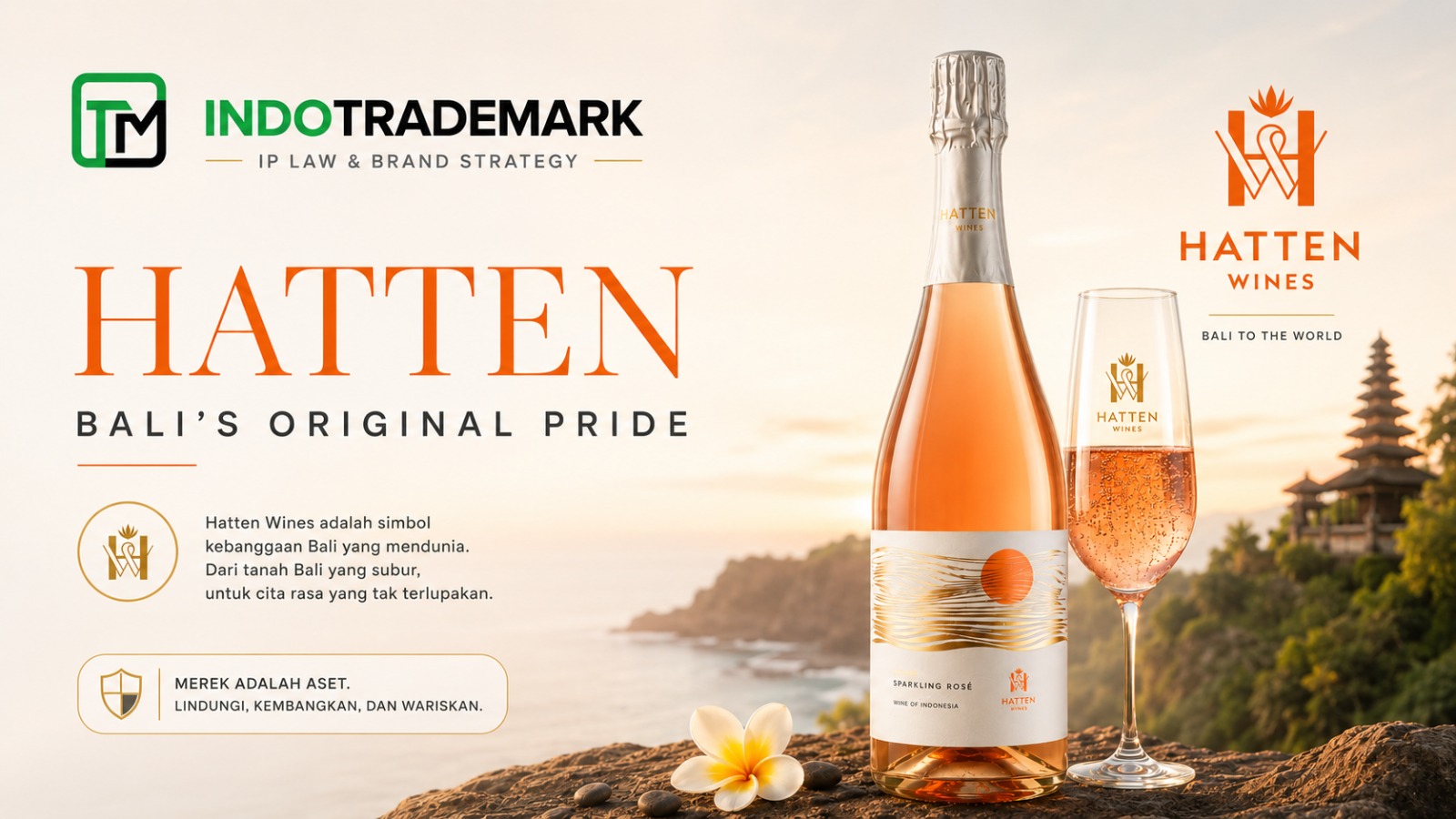
In the midst of increasingly dense business competition, many business actors are beginning to realize that the strength of a brand lies not only in product quality, but also in the name and identity that are consistently built. A brand name often becomes the first point that shapes consumer perception, whether a product feels premium, professional, memorable, or gets lost amidst a market full of similarities.
One interesting example in the world of Indonesian branding is HATTEN, a wine brand from Bali that has successfully built a strong identity with a distinctive positioning in the market.
Interestingly, HATTEN's strength lies not only in its products, but also in its brand naming strategy, which feels simple yet effective. The name "HATTEN" has a firm character, is easy to remember, easy to pronounce, and still feels international without losing its local identity.
In the world of branding, a combination like this is not easily achieved. Many business actors tend to use names that are too general, too descriptive, or too similar to other brands because they are considered easier for the market to understand. However, such an approach often makes it difficult for a brand to build a truly strong and distinct character.
This is where strategies like HATTEN are interesting. The name does not directly explain the product, but rather builds its own identity and associations in the minds of consumers. This approach is widely used by major global brands because it can create a more distinctive, flexible, and easily developable impression in the long term.
HATTEN's strength is also supported by consistent brand stories and positioning. Founded in 1994 by Ida Bagus Rai Budarsa (Pak Gus Rai), HATTEN Wines is known as the original winery from Bali that brings local Indonesian wine to the international market. This approach is interesting because HATTEN does not try to blindly imitate European wine identity, but rather builds a character rooted in Bali as the "Island of the Gods" with a modern and premium approach.
This identity is strengthened through the development of vineyards in the northern coastal areas of Bali, such as Seririt and Sanggalangit, regions with rich volcanic soil and a unique tropical climate. Unlike traditional wine regions in general, HATTEN builds its positioning based on the tropical character of Bali itself. This approach shows that the strength of a premium brand does not always have to stem from following old market standards, but can be formed from the courage to build an authentic and different identity.
Even more interestingly, HATTEN also conducts sustainable viticulture research and development by experimenting with dozens of international grape varieties and collaborating with local Balinese farmers. This step shows that strong brands are usually built not only through design and marketing, but also through consistent quality, innovation, and integrated narratives.
Furthermore, visually, the name HATTEN has a strong structure for design and branding needs. Its letter arrangement is firm, simple, and easy to apply to logos, labels, packaging, and premium promotional media. Factors like these often seem simple, but they actually have a significant impact on building long-term brand perception.
The consistent use of the name, logo, packaging, and premium positioning also becomes an important factor in building brand strength. Many products that actually have good quality fail to build a strong image because their brand identity is constantly changing or lacks a clear character.
Ultimately, HATTEN shows that strong brands are usually born from a combination of branding strategy, identity consistency, product quality, and the right choice of name from the beginning. In the context of modern business, a brand is no longer just a trade name, but an important part of the value and perception of a business.
Therefore, the process of choosing and building a brand should ideally not be seen merely as an administrative formality, but as part of the strategy for building a strong, valuable, and sustainable business identity.
IndoTrademark IP Law & Brand Strategy