


Dr. Ichwan Anggawirya, S.Sn., S.H., M.H.
Amidst the increasingly crowded competition in the coffee and cafe industry, many brands strive to showcase the quality of their coffee beans, roasting techniques, origin, and aesthetic interior design. However, in branding practice, the strength of a brand often arises not solely from product quality, but from its ability to build an emotional connection with its consumers.
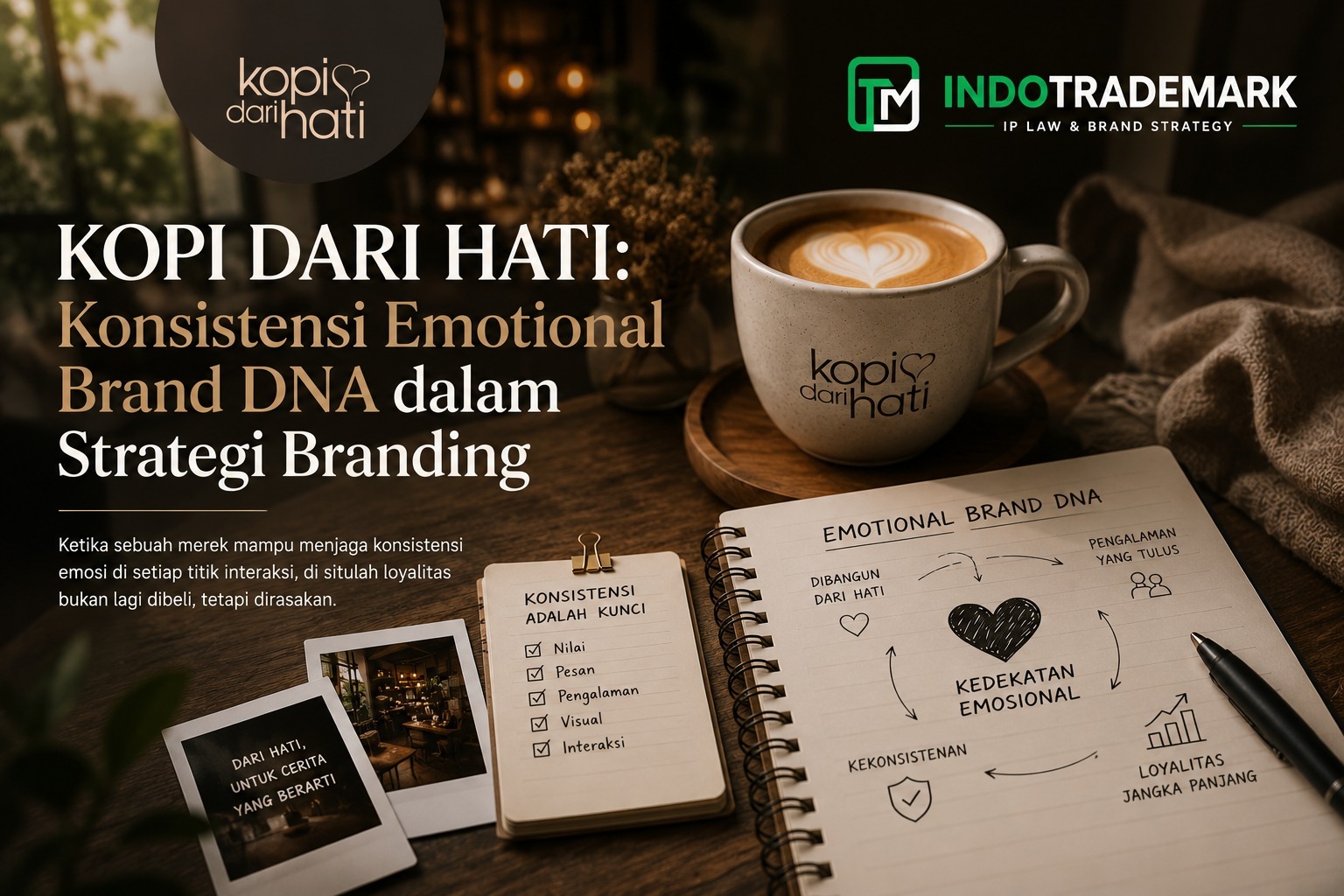
This phenomenon can be observed in the brand "KOPI DARI HATI" (Coffee from the Heart), registered to Hernando Yudha Setiawan. Linguistically, the name is indeed simple. However, behind its simplicity lies a rather strong psychological construction. The word "kopi" (coffee) functions as a concrete product identity, while the phrase "dari hati" (from the heart) directly leads consumer perception to emotional realms such as sincerity, care, closeness, comfort, and personal relationships. Consequently, coffee is no longer positioned merely as a beverage, but as a medium for emotional connection.
This approach is known as emotional branding, a branding strategy that works through emotions, experiences, atmosphere, and psychological attachment. In certain contexts, "KOPI DARI HATI" even moves more specifically towards the concept of intimate lifestyle branding because its brand identity is built through warm, personal, close, and humanistic nuances.
Essentially, almost all major global brands operate through an emotional approach. The difference lies only in the type of emotion being touched. Prestige brands like Rolex, Louis Vuitton, or Hermès still build emotional connections with their consumers, but the emotions fostered are prestige, exclusivity, social status, and admiration. Consumers buy not just the product's function, but the feeling of being more valued and special.
Conversely, "KOPI DARI HATI" chooses a more personal and intimate emotional territory. It doesn't touch on prestige, but rather on warmth, nostalgia, psychological comfort, closeness between people, and a sincere emotional connection. This approach is then reinforced through the tagline "Kamu Obsesi Terindah Dari Hati" (You are the Most Beautiful Obsession from the Heart). This tagline is compelling because it doesn't talk about coffee taste, bean quality, or roasting techniques. Instead, it builds emotional imagination and psychological connection.
The word "obsesi" (obsession) evokes a strong sense of emotional desire, while the phrase "terindah" (most beautiful) creates a romantic and idealistic impression. From a branding perspective, coffee is ultimately positioned not just as a consumer product, but as a symbol of the emotional experience consumers wish to feel.
This consistency in emotional DNA is also evident in other communications like "Take Your Time Gurl." At first glance, this phrase may seem more casual and playful. However, upon deeper analysis, this communication still operates within the same emotional territory. "Kamu Obsesi Terindah Dari Hati" builds a nuance of emotional connection and romantic imagination, while "Take Your Time Gurl" creates a more relaxed, personal, comfortable, and emotionally soothing atmosphere.
Thus, the brand's communication does not stray wildly in different directions, but remains within a consistent DNA: warm, close, personal, romantic, and emotionally comfortable. This is where one of the significant strengths in branding is often seen. Strong brands are generally not built from a single slogan, but from the harmonization of all communication elements that reinforce each other and move towards the same psychological direction.
Therefore, when consumers see the name "KOPI DARI HATI," read the tagline "Kamu Obsesi Terindah Dari Hati," and then encounter communication like "Take Your Time Gurl," this entire sequence subconsciously forms a consistent perception of the brand's character: emotional, warm, close, relaxed, and full of personal nuance.
This phenomenon actually shares a similar approach with Close-Up. In terms of product, Close-Up is just toothpaste. However, for years, the brand has consistently communicated about closeness between couples, self-confidence, chemistry, and personal intimacy. It sells not just clean teeth, but the feeling of security when being close to others.
Even the name "Close-Up" itself is implicitly suggestive, implying proximity and the courage to be personally close. This means the psychological issue addressed is not just bad breath, but social and emotional anxiety in interpersonal relationships. This indicates that branding often works not just through product logic, but through a very deep understanding of human psychology.
From an intellectual property law perspective, this consistency in emotional approach also holds significant strategic value. A brand name and tagline used consistently in business communication can eventually develop into a commercial identity that possesses strong differentiating power in public perception.
In certain practices, a tagline built through creative, distinctive wording that is not merely descriptive can also qualify as a trademark because it functions to differentiate the business identity from others. Therefore, legal protection through trademark registration becomes an important part of safeguarding the exclusivity, reputation, and economic value of a brand that has successfully built an emotional identity in society.
Ultimately, "KOPI DARI HATI" demonstrates that the strength of a brand does not always stem from a complex name or an overly intricate concept. In many cases, the most memorable brands are those that can speak directly to the emotional side of humans. At a certain point, consumers no longer just buy coffee; they buy the feeling of connection that the brand has built.