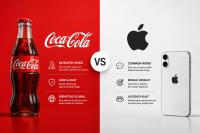


 The effectiveness of a brand's success can largely be attributed to communication factors, as a brand itself is a communication tool from the producer to the consumer. When we start creating a brand, we must determine an effective or targeted communication strategy.
There are numerous communication theories and techniques for building a brand, which will naturally lead to advertising and promotional activities, ultimately becoming a battleground in the market. The winner is certainly the one who can implement the right strategy to position their brand in the minds of consumers.
In the context of brand communication, the author wishes to discuss one aspect that is often overlooked or forgotten, which can be a cause for failure or loss in the market battle. In this regard, the author is not trying to compare which theory is right and which is wrong, but rather focusing on applying strategies in the appropriate context with the given situation.
Simply put, consumers can be divided into two groups: those who choose brands rationally and those who choose emotionally. In reality, every consumer possesses both aspects, but we must understand and recognize which one is more dominant. Even rational consumers can, in certain contexts and situations, become more dominant emotionally.
In this short article, the author does not intend to delve deeply into theory, as the author, as a practitioner, emphasizes practical examples from the field. However, if readers wish to explore the theory further, they can read the theories of Sigmund Freud, a psychoanalyst, regarding the subconscious mind that controls a large part of our behavior.
There are many examples of brand or advertising communication failures related to this issue, but the easiest one to observe is in the concept of anti-smoking campaigns versus cigarette advertisements. The author has previously discussed the comparison of these concepts in the book "Kemasan Yang Menjual" (Packaging That Sells), published by Gramedia in 1999.
In the concept of anti-smoking campaigns, it is clear that these advertisements attempt to communicate rationally about the harmful effects of smoking. The government even mandates the inclusion of text stating that smoking can cause various diseases. These advertisements, with their lengthy descriptions of the toxins present in tobacco, are indeed very rational in highlighting the various diseases.
Advertisements like these are not wrong, but they lack the balance of emotional composition, which should actually be more dominant, thus making them suboptimal. Such rational messages are intentionally directed at the conscious mind, but it is important to remember that a large portion of consumers' choices to smoke are influenced by emotional factors, and the perception of smoking pleasure resides in the subconscious mind. This is where the real battle lies, which the anti-smoking campaign advertisements completely fail to address.
So, what do cigarette advertisements do? The concept of cigarette advertisements is more effective at stimulating the subconscious mind. They creatively create lifestyle symbols that are highly synergistic with the target consumer's character. It is important to note that to find the keywords in the subconscious mind, even Marlboro cigarettes conducted research and changed their brand concept several times, initially targeting women and eventually becoming a macho product.
The author observes that the government's anti-smoking advertising campaign concept has begun to change slightly since the mandatory inclusion of images of sick people in advertisements and cigarette packaging, which is a follow-up to Government Regulation No. 109 of 2012 and Ministry of Health Regulation No. 28 of 2013 concerning the Inclusion of Health Warnings and Health Information on Tobacco Product Packaging. Yes... perhaps they are starting to try to compete in the subconscious mind.
However, to date, anti-smoking campaigns are still considered suboptimal, as stated by Alexander K. Ginting, Special Staff to the Minister of Health and a lung health practitioner, whom we quote from https://news.harianjogja.com/read/2020/01/16/500/1029533/kemenkes-kampanye-larangan-merokok-kalah-dengan-iklan-rokok, who admits that compared to health campaigns, tobacco or electronic cigarette advertisements resonate much more with the public.
By: Ichwan Anggawirya, S.Sn., S.H., M.H.
The author is a Brand and Intellectual Property Consultant, Founder & CEO of INDOTRADEMARK