

Dr. Ichwan Anggawirya, S.Sn., S.H., M.H.
In classical business theory, brands are generally understood as commercial identities that function to differentiate the goods or services of one business entity from those of another. However, in contemporary branding practices, some of the world's major brands have evolved far beyond the mere function of product identification.
At a certain level, brands no longer just sell products, but build symbols, identities, communities, emotional loyalty, and a strong sense of belonging in the minds of their consumers. This phenomenon indicates that some global brands are beginning to function like social belief systems within modern society.
Certainly, the term "religion" in this discussion is not intended in a literal theological or spiritual sense, but rather as a scientific metaphor to describe how some brands are able to build fanaticism, consumption rituals, group identity, and strong emotional attachment in contemporary human behavior.
Logos as Symbols of Social Identity
Throughout human civilization, symbols have always held great psychological power. Flags, royal emblems, and group attributes have long been used to build collective identity and a sense of belonging.
Modern branding works through a relatively similar mechanism. Logos are no longer just product markers, but have evolved into symbols of social identity. A person using a particular product is often no longer just buying its functional utility, but also buying the symbolic meaning attached to that brand.
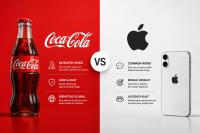
In such conditions, consumers no longer just say, "I use this product," but psychologically begin to feel, "I am part of this brand's identity." This phenomenon is clearly evident in various global brands such as Apple, Harley-Davidson, and Rolex, where consumer loyalty often transcends rational considerations of product function alone.
Consumption Rituals and Brand Fanaticism
In various social belief systems, rituals serve to strengthen emotional bonds among group members. Interestingly, a similar pattern also emerges in modern consumer culture.
New product launches, long queues during releases, limited editions, community events, and the tradition of unboxing on social media are essentially forms of consumption rituals that strengthen the emotional engagement between consumers and brands.
The phenomenon of queuing for new Apple products, for example, is often no longer solely related to practical technological needs. In many cases, there is a strong element of psychological belonging and prestige participation. Consumers feel part of an exclusive community with a specific cultural identity.
A similar pattern is also seen in Harley-Davidson user communities in various countries. Functionally, the product is just a mechanical vehicle, but through the power of branding, it has evolved into a symbol of lifestyle, freedom, and brotherhood.
Luxury Brands and Social Status Hierarchy
The phenomenon of "brands as contemporary religion" is even stronger in the luxury brand industry.
In this context, products are often no longer purchased primarily for their utilitarian function, but for the symbolic power attached to the brand.
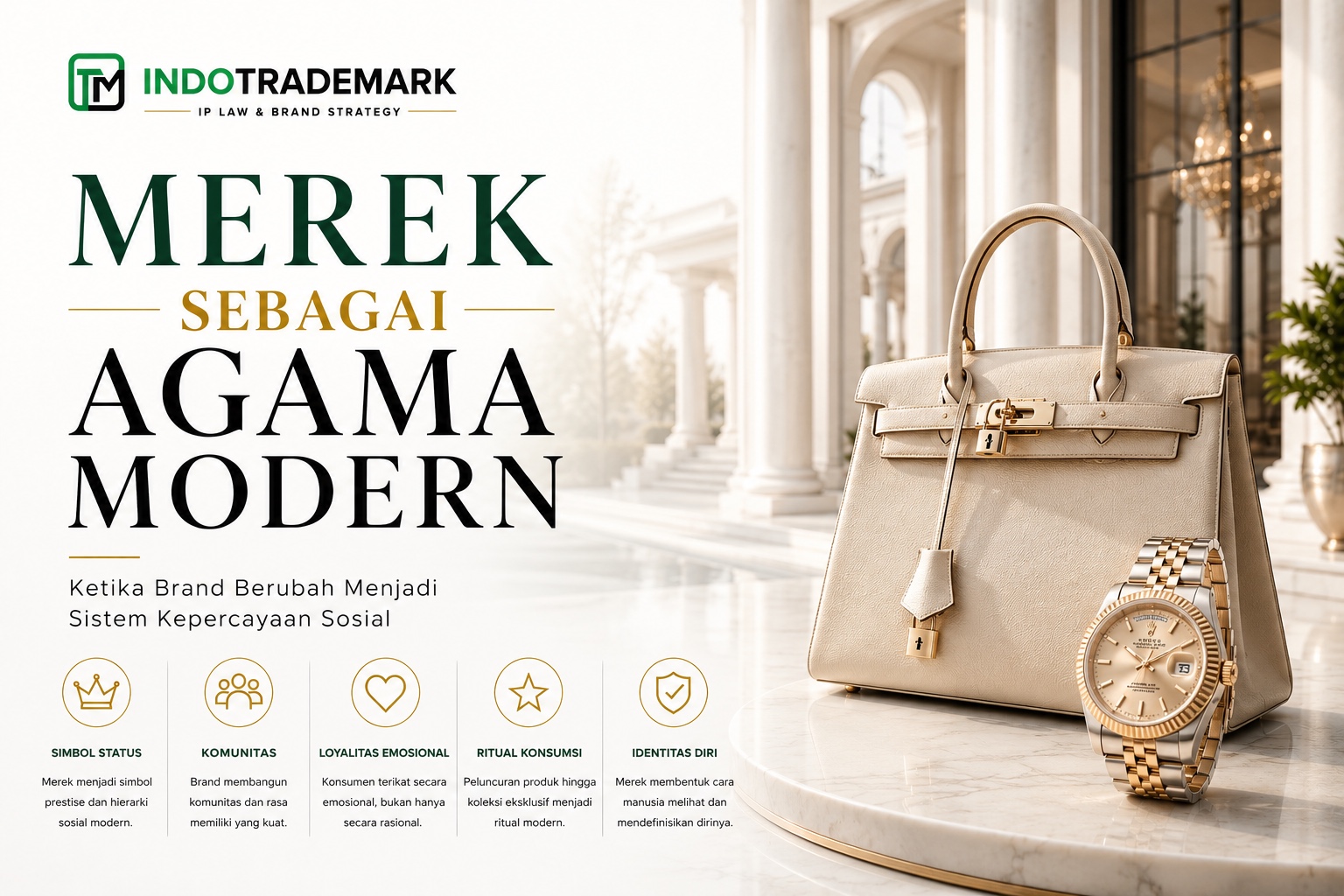
Hermès, Louis Vuitton, and Richard Mille essentially do not just sell bags or watches. These three brands sell prestige, exclusivity, symbolic hierarchy, and social identity.
Rationally, the function of a luxury bag is not fundamentally different from an ordinary bag, and the function of a modern watch is still to tell time. However, in social practice, these luxury products have symbolic value that far exceeds their material function.
Interestingly, some luxury brands build their strength through limited access. Waiting lists, selective distribution, exclusive boutiques, and very high prices are not merely business obstacles, but part of a psychological strategy to enhance prestige perception. In this context, products become tools of symbolic communication within the social structure of modern society.
When Consumers Defend Brands Like Ideologies
Another interesting phenomenon is the emergence of what is known in marketing as brand evangelists, i.e., consumers who voluntarily defend, promote, and even fanatically spread "beliefs" about a brand.
In many situations, criticism of a brand can be perceived as criticism of the consumer's own personal identity. This indicates that brands have successfully penetrated the ego structure and self-image of their consumers. It is at this stage that branding power operates at its deepest level: not merely influencing purchasing decisions, but also shaping how people see themselves within their social environment.
Perception as the Primary Asset in the Modern Economy
This phenomenon explains why the valuation of some global companies is currently more supported by the strength of their brands than by their physical assets alone. In the contemporary economy, perception can be a far more valuable asset than material possessions.
Therefore, business competition today is essentially no longer just a war of products, but a war of perceptions, a war of symbols, and a war of psychological influence in the human mind. The strongest brands are often not those with the most complex products, but those that most successfully build collective meaning in the minds of society.
Branding has evolved far beyond its traditional commercial identity function. At a certain level, some of the world's major brands have succeeded in building symbolic systems that resemble social belief structures, complete with emotional loyalty, consumption rituals, communities, fanaticism, and collective identity. This phenomenon shows that the true strength of a brand does not always lie in its product, but in its ability to build meaning in the human mind.
Because in practice, humans do not always buy what is most rationally needed, but often buy something that makes them feel part of something larger than themselves.
IndoTrademark IP Law & Brand Strategy