

 The Supreme Court (MA) ruled in favor of KOPITIAM and ordered KOK TONG Kopitiam and Lau's Kopitiam to change their names. However, the public eventually wondered because 'kopitiam' is a common word meaning 'coffee shop'.
History of Property Rights
Based on information gathered by detikcom, Friday (17/4/2015), trademarks as part of property rights are not actually laws originating from the spirit of the Indonesian nation. The Indonesian nation, which recognizes the principle of mutual cooperation and social justice, has not cultivated property rights values in daily life since ancient times.
This is different from Article 363 of the Criminal Code concerning theft, for example. Although that regulation originated from the Dutch and was brought by the colonizers, the Indonesian nation has also rejected theft in its environment since ancient times. Thus, Article 363 of the Criminal Code can be accepted by the community. This prohibition is also part of the 'molimo' teachings, namely madat (opium), madon (adultery), minum (drinking), main (gambling), and maling (stealing).
The first property rights holders in the world were Caxton, Galileo, and Guttenberg. They patented their inventions in Venice, Italy, in 1470. In England, property rights first emerged with the enactment of the Statute of Monopolies in 1623. The United States only had a Patent Law in 1791.
With the numerous property rights regulations, an international meeting was held, resulting in the Paris Convention for the Protection of Industrial Property, signed on March 20, 1883. This convention was then revised:
a. Revised in Brussels on December 14, 1990
b. Revised in Washington on June 2, 2011
c. Revised in The Hague on November 6, 1925
d. Revised in London on July 2, 1934
e. Revised in Lisbon on October 31, 1958
f. Revised in Stockholm on July 14, 1967
g. Amended in Paris on September 28, 1979
In response to these global developments, the Indonesian government ratified it through Presidential Decree Number 24/1979, amended by Presidential Decree Number 15 of 1997. This Presidential Decree then became the basis for the enactment of the Trademark Law. Article 5 letter c of the Trademark Law provides an example of 'a skull above two crossed bones' which is generally known as a danger sign and therefore cannot be used as a trademark.
The Trademark Law also recognizes the term 'public domain' or 'public property,' which can be interpreted as 'signs that, because they are widely known and accepted and freely used among the public, are no longer sufficient to be used as identifiers for the personal needs of a particular person.'
Kopitiam
Kopi tiam, or it can be written as kopitiam, is a mixed language of Malay and Chinese ethnic languages and has become part of the living language in Indonesia. 'Kopi tiam' is written in various forms, from 'kopi tiam,' 'kopitiam,' or directly referring to it using Chinese characters. Kopi means coffee and tiam means shop, so kopi tiam/kopitiam means coffee shop.
In Singapore, the kopitiam/coffee shop business was pioneered by Hainanese Chinese immigrants who were initially laborers. Due to their desire to improve their living standards, they opened kopitiams/coffee shops, bakeries, and food establishments – in line with their cooking skills.
They began opening kopitiams/coffee shops in the early 19th century near plantations, with the main customers being Chinese, Indian, and Malaysian immigrant workers. Besides selling coffee, these shops also sold light snacks, snacks, and even main meals. The coffee shop owners only had wooden houses with tables and chairs as dining areas.
Entering the 20th century, this kopitiam-style coffee shop began to 'move upmarket' with the establishment of Killiney Road in 1919 by a Hainanese immigrant.
"Located along the busy Killiney Road, the shop was established in late 1919. At that time, although it was an old and simple shop, its toasted bread and hot drinks were very popular among many people. Although it was just an ordinary Hainanese kopitiam (coffee shop), they served good quality brewed coffee and tea, not to mention traditional toast," Killiney Kopitiam wrote on its website.
Not only in Singapore and Malaysia, but in Indonesia, kopitiams also entered the northern regions of Sumatra and Kalimantan. Coffee shops (kopitiams) stood on almost every street corner. However, during the New Order era, when it was taboo to highlight Chinese identity, the use of the term 'kopi tiam' was disguised. Following the fall of Suharto, Inpres Number 6 of 2000 was issued, which canceled Inpres Number 14 of 1967 concerning Beliefs and Chinese Customs regarding the restriction of Chinese customary activities. After this ban was lifted, Chinese identity gradually began to appear in public spaces.
KOPITIAM
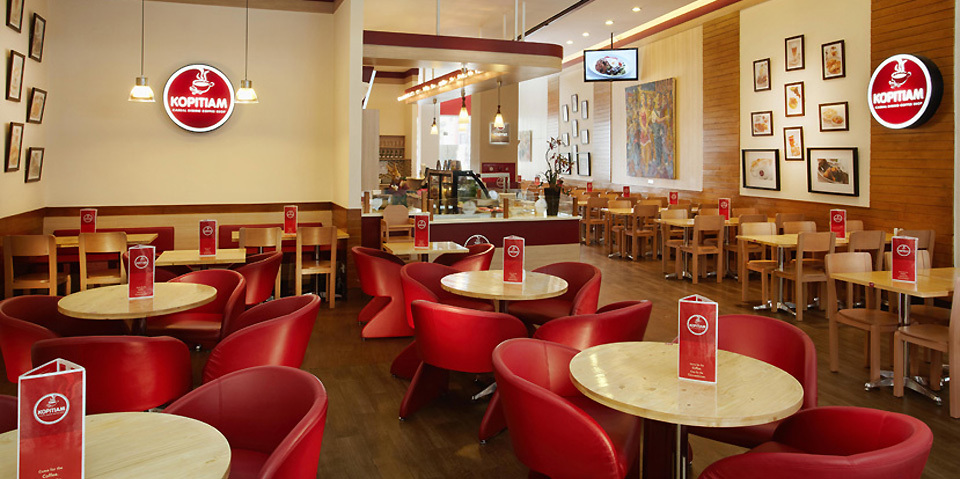
Abdul Alex Soelystio registered the KOPITIAM trademark on October 18, 1996. He obtained a trademark number from the Ministry of Law and Human Rights with the number IDM00030899. The KOPITIAM trademark is characterized by the use of capital letters in orange. Abdul Alex then extended the trademark rights on March 14, 2005.
KOK TONG Kopitiam
Paimin Halim registered his kopitiam on December 4, 2006, under the brand name KOK TONG Kopitiam. Paimin's cafe highlighted the KOK TONG brand, and the word 'kopitiam' served as an identifier that the cafe was a coffee shop.
Lau's Kopitiam
Phiko Leo Putra registered Lau's Kopitiam coffee shop on September 16, 2013. Similar to KOK TONG Kopitiam, Phiko's cafe highlighted the Lau's brand, and the word 'kopitiam' served as an identifier that the cafe was a coffee shop.
Application of Law by the Supreme Court
The Supreme Court declared KOPITIAM the winner in its case against KOK TONG Kopitiam and Lau's Kopitiam. When adjudicating KOPITIAM vs. KOK TONG Kopitiam in 2013, Supreme Court Justice Nurul Elmiyah expressed a dissenting opinion.
"The generic trademark 'KOPITIAM' should not have been registered based on Article 5 letter c of Law Number 15 of 2001 concerning Trademarks," said Nurul.
The same was stated by Supreme Court Justice Syamsul Maarif. He stated that KOPITIAM was not entitled to exclusive rights over the word KOPITIAM.
"KOPITIAM is a word generally used by the Malay community for a shop that sells coffee, so all shops that sell coffee are basically entitled to use this word to complement their trade name. Therefore, in the case at hand, the dominant factor in determining the similarity or lack thereof in substance for the 'Kok Tong Kopitiam' trademark owned by the PK applicant is not the word 'KOPITIAM' but the word 'KOK TONG'. Therefore, the trademark 'Kok Tong Kopitiam' does not have substantial similarity with the trademark 'KOPITIAM'," said Syamsul.
However, Nurul Elmiah and Syamsul Maarif were outvoted by 3 other Supreme Court justices, so KOPITIAM won and ordered KOK TONG to change its name.
Similarly, when KOPITIAM was sued by Lau's Kopitiam, the Supreme Court again ruled in favor of KOPITIAM. Strangely, Syamsul Maarif reversed his stance and supported KOPITIAM in the Lau's Kopitiam verdict. The verdict did not explain why Syamsul changed his view.
"Those seeking justice must be given clear and rational considerations for any changes," said constitutional law expert Bayu Dwi Anggono.
So, is it true that Lau's Kopitiam and KOK TONG Kopitiam are similar to KOPITIAM? Here are images of the two trademarks.
Source: detik.com