

News & Articles

News & Articles

Collection of the latest news and articles related to IPR, trademarks, patents, and business development.


Find News & Articles

AQUAPROOF and Suggestive Branding Strategy: When a Brand Name Answers Consumer Concerns

10 - May - 2026
AQUAPROOF and Suggestive Branding Strategy: When a Brand Name Answers Consumer Concerns

Dr. Ichwan Anggawirya, S.Sn., S.H., M.H.

Not all brands are built to create prestige, lifestyle symbols, or an exclusive impression solely. In many categories of problem solver products, the strength of a brand is born from its ability to touch the most sensitive points in consumer psychology: worry, discomfort, and the need for protection. It is in this context that Aquaproof becomes an interesting example of how naming strategy can work to shape the perception of a solution in the market's mind.

Building leaks are fundamentally not just a technical issue. Psychologically, a leaky house is often associated with damage, repair costs, inconvenience, and even a sense of insecurity about one's own home. Therefore, when consumers look for waterproofing products, what they are actually seeking is not just a coating paint, but peace of mind against the threat of leaks.

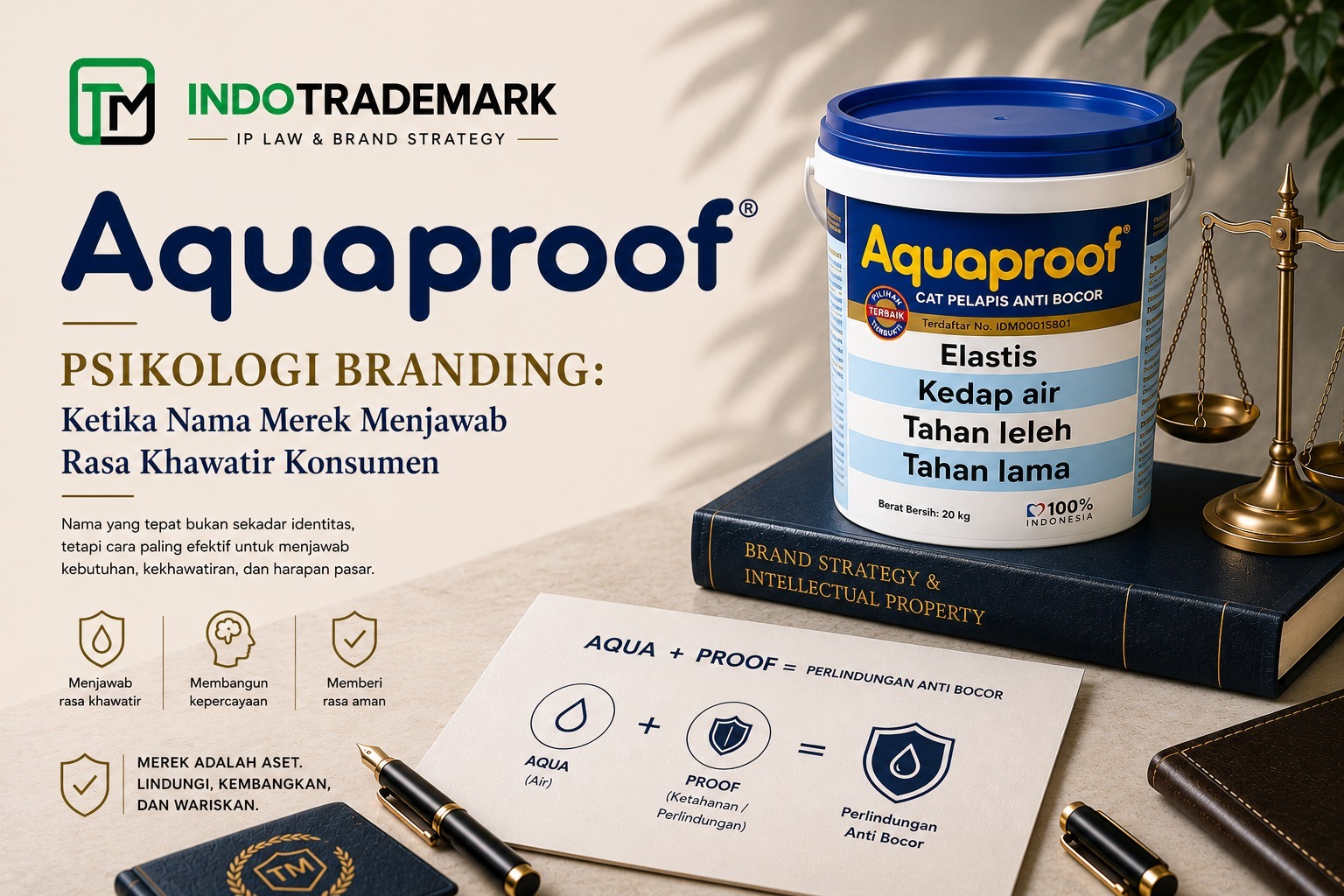
This is where the name "Aquaproof" works very effectively. Even before reading the product specifications, consumers generally grasp the association of protection against water or seepage first. The word "Aqua" has a strong connection to water, while "Proof" is associated with resistance or protection. When combined as "Aquaproof," the consumer's brain almost instantly reads a simple yet powerful message: protection against leaks.

Interestingly, this approach is not just a linguistic coincidence, but part of branding psychology. In certain product categories, especially those that are problem solvers, consumers are generally more quickly attracted to brands that can instantly address their pain points. Names that are too abstract are often less effective than names that can quickly create relevance with market needs.

However, on the other hand, this approach also presents challenges in terms of trademark law. The closer a name is to the product's function or characteristics, the greater the risk of it being considered too descriptive and lacking distinctiveness. Therefore, professional naming strategies essentially always operate in a fine line: communicative enough for the market, yet still possessing a distinct identity character.

In branding practice, this approach is often referred to as suggestive naming, which is a brand name that builds associations with the product's function, benefits, or characteristics without directly being a purely descriptive term. This strategy is widely used by global brands because it is considered effective in terms of market psychology and relatively safer in creating brand distinctiveness.

Examples can be seen in Sensodyne, which builds an association with sensitive teeth without literally using the term "sensitive toothpaste"; then Head & Shoulders, which implicitly refers to dandruff problems in the head and shoulder area; and Clearasil, which suggests clear skin without becoming a generic term for facial care products. Upon further analysis, suggestive brands generally feel more "brandable" because they still leave room for imagination and differentiation in the consumer's mind, unlike brands that explain product functions too bluntly, losing their identity character.

In this context, Aquaproof can be seen as a combination or modification of words that are suggestive or semi-invented, thus retaining its distinctiveness as a brand. Although it evokes an association with its product function, the name does not directly become a purely descriptive term like "waterproof," which is commonly used in trade to explain the generic properties or uses of goods.

This strategy is further strengthened by the use of a combined word form without a space, namely "Aquaproof." Linguistically, the public can still recognize the elements "Aqua" and "Proof," but their combination helps form the perception of a unified brand identity. This approach is also commonly used in branding to create names that remain communicative yet feel more distinctive as a commercial identity, such as Pinterest, Instagram, or Netflix.

Visually, Aquaproof is also quite consistent with its product DNA. The dominance of blue builds an association with water and protection, while yellow creates high visibility to be easily seen in hardware store display areas. All its elements are directed not to build an impression of luxury, but rather a sense of trust, functional clarity, and solution effectiveness.

This phenomenon shows that branding is not just a matter of visual aesthetics. Behind a seemingly simple name, there is often a very deep analysis of consumer psychology, market anxieties, and how the human brain builds associations with a solution.

Ultimately, a concept like Aquaproof demonstrates that a strong branding strategy is not just about the product name, but about how a brand is designed to directly touch a consumer's psychological point: the worry about leaks and the need for protection.

IndoTrademark
IP Law & Brand Strategy

 

read: 1023 times

TAG :

trademark registrationregister trademarkcheck trademarktrademark registrationtrademark lawyerbranding strategy
 

Related News & Articles

Others News & Articles

1 2 3 4 »
 

KUTUS KUTUS: When Naming Strategy, Philosophy, and Legality Converge in an Herbal Brand

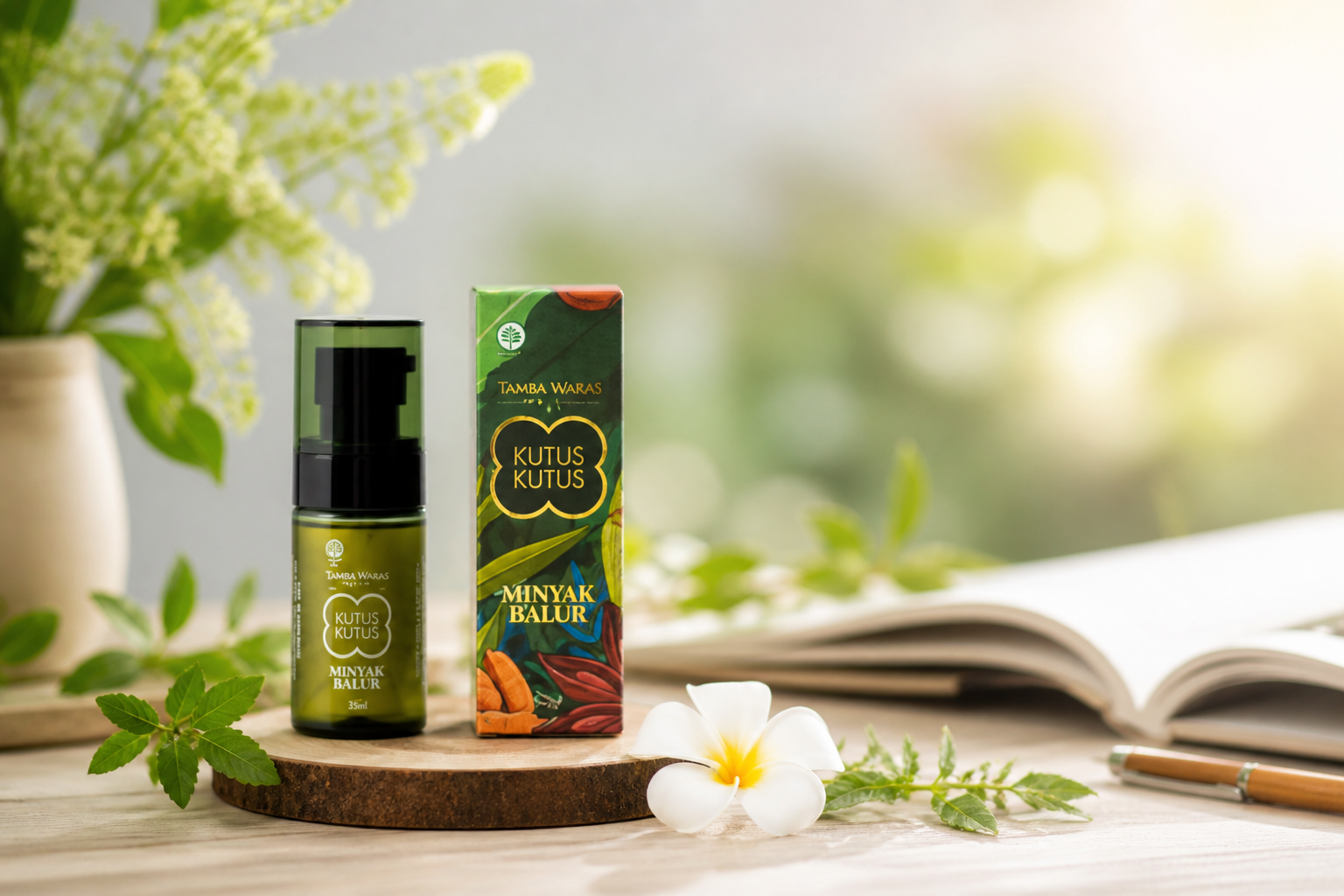
Amidst the proliferation of herbal products in Indonesia, only a few brands manage to transcend being mere products and transform into brands with strong, distinctive, and sustainable identities. One compelling case study is the brand KUTUS KUTUS, a herbal balming oil registered under the name Fazli Hasniel Sugiharto since 2014. More than just a herbal oil, KUTUS KUTUS is a case study on...

Mediation in Copyright Crimes, Beneficial or Detrimental to the Victim?

By: Ichwan Anggawirya Copyright is a form of intellectual property that is intangible and is a property right. One of the characteristics or principles inherent in property rights is the principle of droit de suite, the principle of the right to follow the object. The right to claim will continuously follow the object, regardless of who possesses it. As an intangible property right,...

The Battle of Two Roses Was Finally Won by Wardah

Wardah, as the originator and first inventor of the liquid laundry freshener formulation under the brand Mawar Super Loundry, can now breathe a sigh of relief. The trademark cancellation lawsuit, which was won at the Commercial Court level, has now become final with the Supreme Court's Decision Number 161 K/Pdt.Sus-HKI/2019, which rejected the cassation request from the cassation...

Ichwan Anggawirya: PB Djarum Badminton Scholarship Auditions Do Not Exploit Children

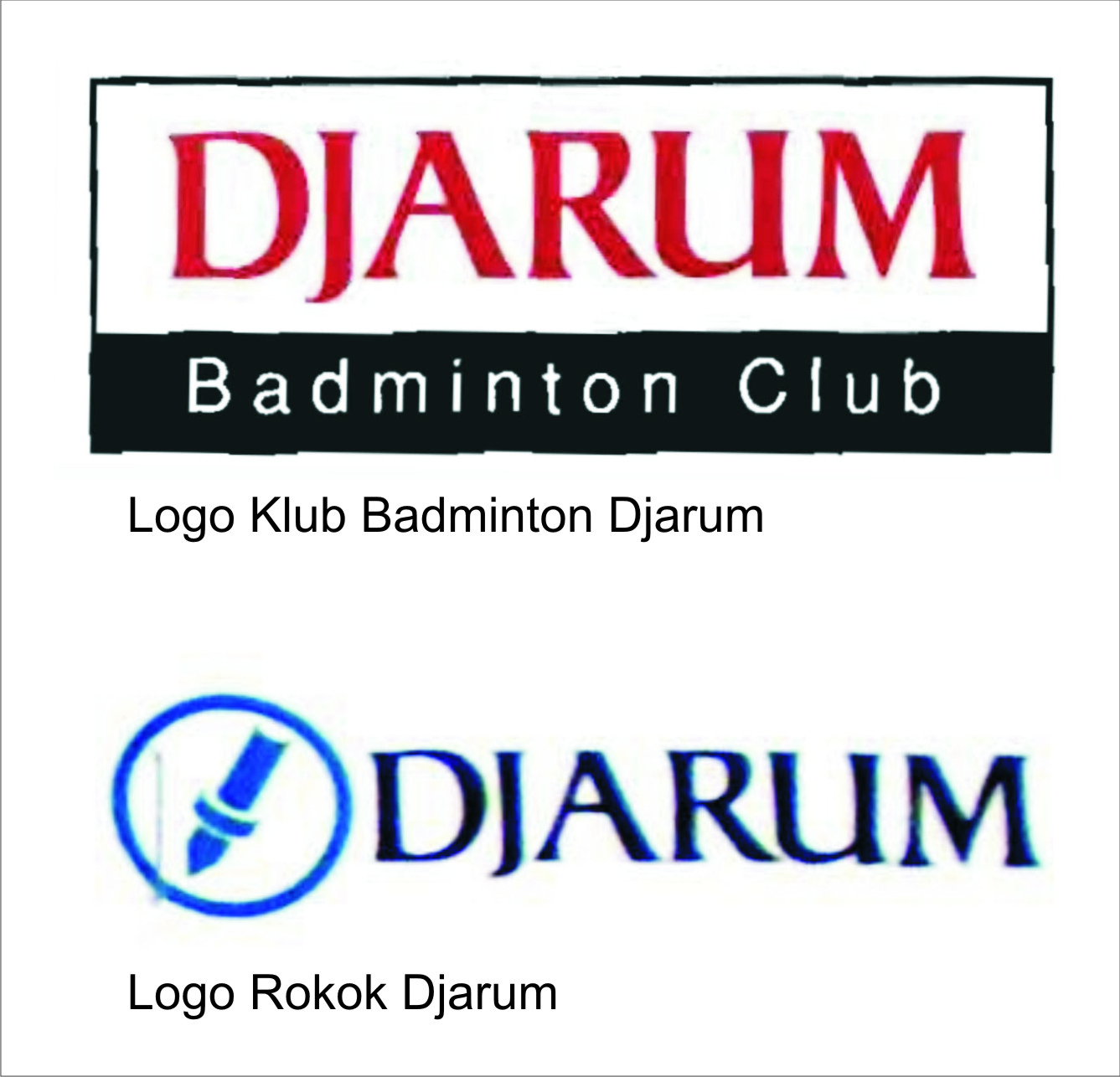
The talent search audition for Badminton conducted by the Badminton Association (PB) Djarum became a polemic due to comments stating that PB Djarum was exploiting children under Law No. 35 of 2014.   Intellectual Property Rights practitioner and expert, Master of Law from Bung Karno University, Ichwan Anggawirya, stated in a group discussion forum at the Master of Law campus of...

Mawar Super Laundry Trademark Dispute

Siti Wardah, a businesswoman producing cleaning fluids for laundry, has filed a lawsuit to cancel the trademark 'MAWAR SUPER LAUNDRY'. The lawsuit was registered at the Commercial Court of Jakarta. "My client filed the cancellation lawsuit because the trademark registration was done in bad faith and dishonestly," said the plaintiff's legal counsel, Ichwan Anggawirya,...

80 Years of Copyright Dispute Over "Happy Birthday to You" Song Ends

Los Angeles - The song "Happy Birthday to You" is probably a common tune at birthday parties. However, behind it lies a dispute over who holds the copyright. Is it the melody's creator, sisters Mildred Hill? Who first created the melody of the song with the original title 'Good Morning to All' for kindergarten children in 1889, or someone else?   This simple...

Brand Dispute, German Baby Stroller Company Sues Local Cybex

German baby stroller manufacturer, Cybex gmbH, was surprised that its trademark registration in Indonesia was not approved by the Ministry of Law and Human Rights because there was already a stroller with a brand similar to the Cybex brand. Legal action has been taken.   The case began when Cybex gmbH filed a trademark registration application with the Directorate of Trademarks of...

Trademark Dispute, BMW Car Loses to BMW Clothing from Penjaringan

The Supreme Court (MA) rejected the Judicial Review (PK) filed by the German car company, BMW. As a result, Henrywo Yuwijono can now breathe easy producing the clothing brand BMW, also known as Body Man Wear.   The case began when Beyerische Motoreen Werke (BMW) Aktiengesellschafft sued Henrywo, a resident of Muara Karang, Penjaringan, North Jakarta. The Munich, Germany-based...

Spanish Lois fails to cancel local trademark

Jakarta. The licensee of the Lois trademark in Indonesia, PT Intigarmindo Persada, failed to cancel the Newlois and Redlois trademarks owned by local entrepreneur Agus Salim after the Central Jakarta Commercial Court rejected its lawsuit on Tuesday (31/5).   "Adjudicating, rejecting the plaintiff's lawsuit in its entirety," stated the chief judge Didiek Riyono in his...

Led Zeppelin Wins Copyright Lawsuit for Stairway to Heaven

Legendary music group Led Zeppelin won a copyright lawsuit filed against the members of the English rock band, after a jury rejected claims that the opening guitar riff of Stairway to Heaven was taken from the US band, Spirit.   The jury's decision, which found substantial differences between Stairway to Heaven and Spirit's instrumental song Taurus, was made after a full...

Need a Free Consultation?

Our expert team is ready to help you choose the right services for your business needs