


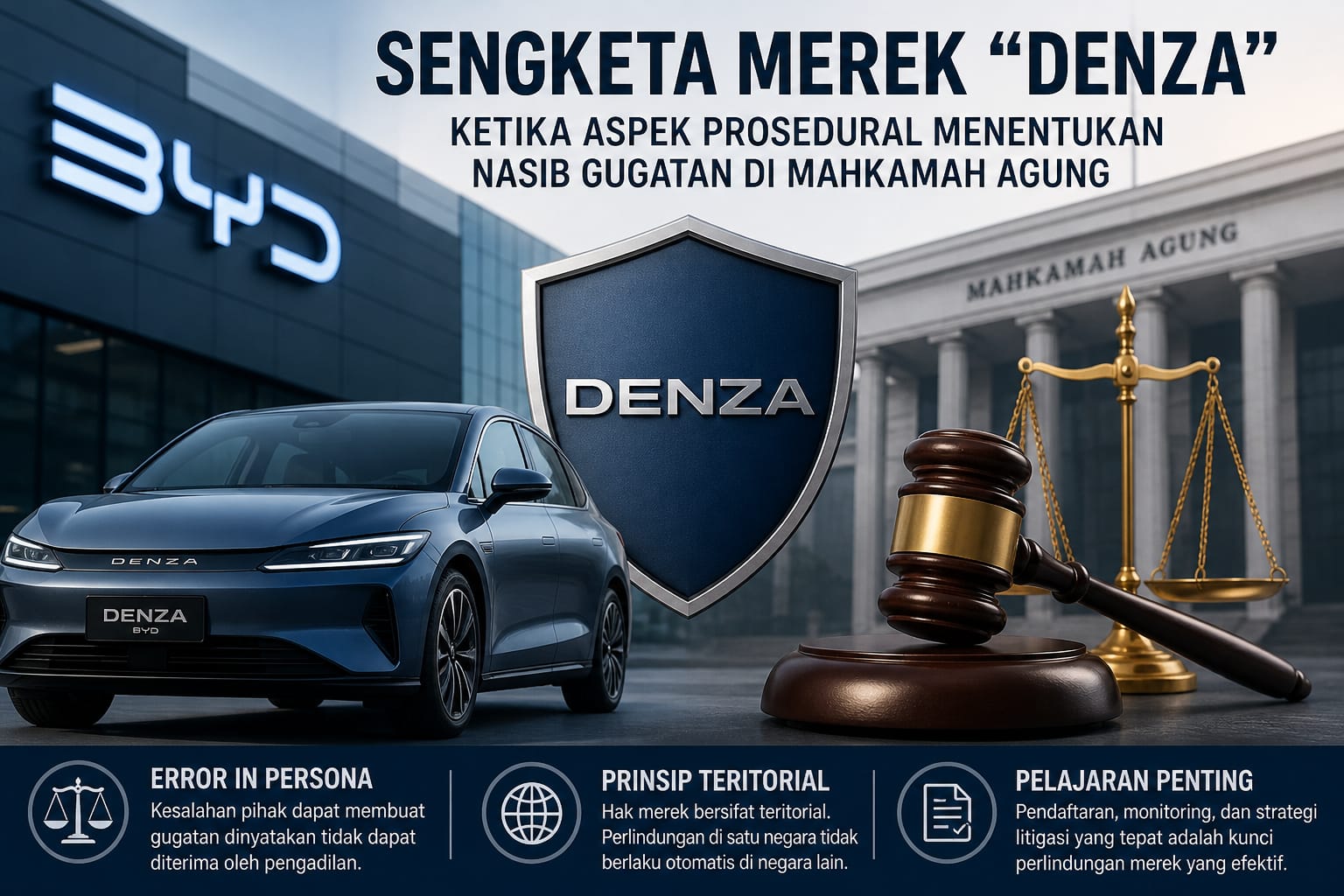
Sengketa merek kembali menunjukkan kompleksitasnya melalui perkara penggunaan nama “Denza” di Indonesia. Dalam perkembangan terakhir, proses kasasi di Mahkamah Agung menghasilkan putusan yang tidak berpihak pada pihak penggugat, sehingga menegaskan bahwa dalam hukum merek, aspek prosedural dapat menjadi faktor penentu, bahkan sebelum masuk ke pokok perkara.
Sekilas Perkara
Perkara ini berangkat dari sengketa kepemilikan dan penggunaan merek “Denza” antara perusahaan global dan pihak lokal di Indonesia. Pada tingkat kasasi, Mahkamah Agung dalam putusan Nomor 1338 K/Pdt.Sus-HKI/2025 menyatakan bahwa gugatan yang diajukan tidak dapat diterima.
Putusan tersebut didasarkan pada adanya kesalahan dalam penentuan subjek hukum (error in persona), yang muncul akibat adanya perubahan atau peralihan kepemilikan merek kepada pihak lain sebelum gugatan diproses secara tepat.
Dengan kata lain, perkara ini tidak sepenuhnya diputus berdasarkan siapa yang “lebih berhak” secara substansi, melainkan karena ketidaktepatan pihak yang digugat dalam proses hukum.
Analisis Hukum: Error in Persona dalam Sengketa Merek
Dalam perspektif hukum perdata, error in persona merupakan cacat formil yang dapat menyebabkan gugatan dinyatakan tidak dapat diterima (niet ontvankelijk verklaard). Ini berarti:
- Pengadilan tidak masuk ke pokok sengketa
- Hak substantif para pihak belum tentu diputus benar atau salah
- Gugatan dapat diajukan kembali dengan perbaikan pihak
Dalam konteks hukum merek, kondisi ini sering terjadi ketika:
- Terjadi peralihan hak (assignment) atas merek
- Perubahan pemilik tidak diikuti pembaruan strategi gugatan
- Data kepemilikan tidak sinkron dengan kondisi aktual
Secara akademis, hal ini menunjukkan bahwa perlindungan merek tidak hanya bergantung pada hak eksklusif yang melekat, tetapi juga pada ketepatan strategi litigasi.
Dimensi Teritorial dalam Hukum Merek
Perkara ini juga menegaskan prinsip fundamental dalam hukum merek, Hak merek bersifat teritorial (territorial principle), artinya:
- Kepemilikan merek di tingkat global tidak otomatis berlaku di Indonesia
- Setiap negara memiliki sistem pendaftaran dan penegakan hukum sendiri
Implikasi Praktis bagi Pelaku Usaha
Dari perkara ini, terdapat beberapa pelajaran penting, yaitu:
- Pendaftaran saja tidak cukup. Harus diikuti dengan monitoring kepemilikan dan pembaruan data hukum
- Peralihan hak harus diantisipasi secara strategis. Jika tidak, dapat memicu kesalahan pihak dalam gugatan
- Litigasi HKI memerlukan presisi tinggi. Kesalahan formil dapat menggugurkan seluruh proses tanpa menyentuh substansi hak
Perkara “Denza” menunjukkan bahwa dalam sengketa merek, kemenangan tidak hanya ditentukan oleh siapa yang memiliki hak, tetapi juga oleh ketepatan dalam menjalankan prosedur hukum.
Dalam praktiknya, pendekatan terhadap merek tidak dapat dilakukan secara administratif semata. Dibutuhkan analisis menyeluruh sejak awal mulai dari pendaftaran, pengelolaan, hingga strategi penegakan hukum agar merek tidak hanya terdaftar, tetapi juga terlindungi secara efektif di setiap yurisdiksi.